
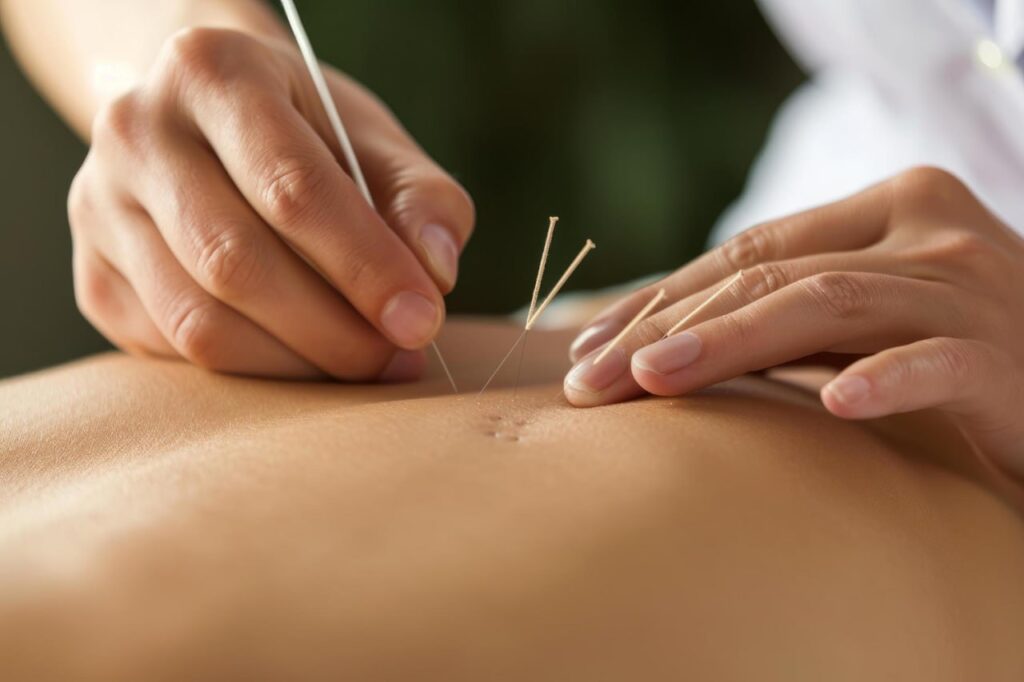
Acupuncture is an ancient therapeutic practice that involves the insertion of fine needles into specific points on the body to promote healing and alleviate pain. It is a key component of Traditional Chinese Medicine (TCM) and has been practiced for over 2,500 years. In recent decades, acupuncture has gained international recognition as an effective alternative therapy for a variety of medical conditions. Its history is deeply interwoven with the development of Chinese culture, philosophy, and medicine, reflecting the shifts in understanding of health and disease over millennia.
This article delves into the historical evolution of acupuncture, exploring its origins in ancient China, the development of the theories behind it, its spread to the rest of the world, and its modern-day practice.
Origins of Acupuncture
The exact origins of acupuncture are difficult to pinpoint, largely because its development is deeply rooted in the prehistoric era, long before written records were established. Nonetheless, archaeological evidence and ancient texts suggest that acupuncture likely began during the Neolithic period (c. 10,000–4,000 BCE). During this time, primitive forms of it were practiced using sharpened stones, known as “bian stones,” which were used to treat ailments by pricking the body.
The earliest evidence of acupuncture needles comes from the Shang Dynasty (c. 1600–1046 BCE), where bone and bamboo needles were discovered in tombs, suggesting that needle-based therapies were already in use. It is believed that the practice was initially developed to treat pain, particularly musculoskeletal issues, based on the understanding that the body had certain points that, when stimulated, could relieve discomfort.
Acupuncture in Ancient Chinese Texts
The first known written references to acupuncture are found in ancient Chinese medical texts, the most famous of which is the Huangdi Neijing (The Yellow Emperor’s Classic of Internal Medicine), which dates back to around 200 BCE during the Warring States Period (475–221 BCE) or the early Han Dynasty (206 BCE–220 CE). The Huangdi Neijing is a foundational text for Traditional Chinese Medicine and contains detailed descriptions of acupuncture theory, techniques, and meridians (the energy pathways of the body).
In the Huangdi Neijing, acupuncture is explained within the broader context of Chinese cosmology, particularly the concepts of Qi (the body’s vital energy), Yin and Yang (the dualistic nature of life), and the Five Elements (Wood, Fire, Earth, Metal, and Water), which are used to describe the interactions between the body’s internal organs and the external environment. The book describes the human body as a microcosm of the universe, with its own energy system that could be balanced and harmonized through acupuncture.
According to this early theory, illness arises when the flow of Qi through the body’s meridians becomes blocked or imbalanced. Acupuncture was seen as a way to restore the proper flow of Qi by stimulating specific points along these meridians, called acupoints, with needles. The practice was highly individualized, with treatments tailored to the patient’s unique constitution and the specific imbalance of Qi they were experiencing.
Development and Expansion during the Han Dynasty
The Han Dynasty (206 BCE–220 CE) is considered a golden age in the development of Chinese medicine, and acupuncture flourished during this period. With the advent of metal needles made of bronze, silver, and gold, acupuncture became more refined and effective. The theory of meridians and acupoints became more systematized, with texts like the Zhen Jiu Jia Yi Jing (The Systematic Classic of Acupuncture and Moxibustion), written by Huangfu Mi in the 3rd century CE, offering more detailed guidance on this techniques and therapeutic strategies.
During the Han Dynasty, acupuncture was closely linked to other medical practices, such as herbal medicine, moxibustion (the burning of mugwort near acupoints), and massage therapy. Acupuncture was widely practiced among the elite and commoners alike, and it was considered an essential tool in the physician’s toolkit.
The Spread in Asia
During the Tang Dynasty (618–907 CE), acupuncture spread beyond China to other parts of Asia, including Korea and Japan. This period saw the rise of medical schools dedicated to the teaching of it, and Chinese medical texts were translated into other languages. In Japan, for instance, acupuncture was introduced in the 6th century, and over time, it developed into a distinct practice known as Hari, which incorporated elements of Japanese culture and aesthetics.
In Korea, acupuncture was introduced around the same time and became a central component of traditional Korean medicine. The Korean adaptation of acupuncture, known as Saam acupuncture, emphasizes the use of fewer needles and focuses on stimulating specific points that correspond to the five elements and meridians, similar to the original Chinese system.
As acupuncture spread throughout Asia, it continued to evolve and adapt to the cultural and medical contexts of each country. Despite these regional variations, the core principles of acupuncture—balancing Qi and harmonizing the body’s energy systems—remained consistent.
Decline and Revival in China
Although acupuncture was widely practiced during the Tang and Song dynasties, it began to decline in China during the Ming (1368–1644) and Qing (1644–1912) dynasties. With the rise of Western medicine in the late Qing period, it was regarded by some as outdated or even superstitious. The introduction of modern science and medical practices from Europe led to a period of skepticism and marginalization of traditional Chinese medicine, including acupuncture.
In 1822, the Qing government officially removed acupuncture from the Imperial Medical Institute, signaling its fall from favor among the elite. For the next century, acupuncture was practiced mainly by rural healers, who continued to pass down the tradition orally and through small community-based medical practices.
However, the early 20th century saw a revival of this method, particularly during the Chinese Cultural Revolution (1966–1976), when the Chinese government sought to promote traditional practices as part of its broader ideological and political agenda. In the 1950s, the Chinese government re-established acupuncture as a formal medical practice, and acupuncture institutes were set up to train practitioners.
Acupuncture’s Introduction to the West
Acupuncture was relatively unknown outside of Asia until the 17th century when European travelers and missionaries, such as Jesuit priest Father Jean-Baptiste du Halde, brought back reports of the practice. However, these early accounts did not lead to widespread adoption in Europe.
It wasn’t until the 20th century, particularly in the 1970s, that acupuncture gained significant attention in the West. One of the key moments that helped popularize that in the United States occurred in 1971 when a journalist named James Reston from The New York Times underwent an emergency appendectomy in China and reported that acupuncture had been used to relieve his postoperative pain. His article brought acupuncture to the attention of the American public, and interest in the practice grew rapidly.
In the 1970s and 1980s, acupuncture clinics began to appear in Europe and the United States, and researchers started to investigate its efficacy in treating various conditions. Western scientists, while skeptical of traditional Chinese explanations of Qi and meridians, began to explore acupuncture’s effects on the nervous system, pain pathways, and endorphin release.
Acupuncture in Modern Medicine
Today, acupuncture is widely practiced around the world, and it has been integrated into various healthcare systems, particularly as a complementary or alternative therapy. In 1997, the National Institutes of Health (NIH) in the United States officially recognized acupuncture as a viable treatment for certain conditions, including chronic pain, osteoarthritis, and postoperative nausea. Since then, acupuncture has been increasingly accepted by mainstream medical institutions, with many hospitals and clinics offering acupuncture as part of their integrative medicine programs.
Scientific research on acupuncture has grown significantly, with numerous studies exploring its mechanisms and effectiveness. While the exact mechanisms by which acupuncture works are still debated, several theories have been proposed, including:
- Neurohormonal Mechanisms: It is thought that endorphins and other neurotransmitters that regulate pain and aid in healing are released more readily after receiving acupuncture.
- Gate Control Theory:Acupuncture may stimulate nerve fibers that prevent the brain from receiving pain signals.
- Autonomic Regulation: The autonomic nervous system may be influenced by acupuncture, which could balance the body’s reaction to stress and encourage relaxation.
Despite the growing body of research, acupuncture remains a subject of debate within the medical community. Some studies have shown clear benefits for conditions like chronic pain, migraines, and anxiety, while others have questioned its efficacy for certain conditions. Nonetheless, acupuncture continues to be a popular alternative therapy, particularly for those seeking non-pharmacological approaches to pain management and wellness.
Globalization and Contemporary Practice
Acupuncture has become a global practice, with practitioners in almost every country. Different regions have developed their own variations of the practice, such as Korean Hand Acupuncture, which focuses on the hands as a microcosm of the body, or Auricular Acupuncture, which targets points on the ear.
In the West, this method is often used in conjunction with other medical treatments, forming part of a holistic approach to healthcare. Licensed acupuncturists typically undergo extensive training, and acupuncture is regulated as a medical practice in many countries.
Conclusion
The history of acupuncture is a testament to the enduring power of ancient medical traditions. From its early roots in Neolithic China to its modern-day use in clinics and hospitals around the world, acupuncture has evolved significantly while retaining its core principles. Its emphasis on balancing the body’s energy systems, promoting healing, and treating the person as a whole has made it an appealing option for patients seeking alternative or complementary treatments.
As research continues to explore the mechanisms behind acupuncture and its applications in modern medicine, it remains a unique and valuable component of global healthcare, bridging the gap between ancient wisdom and contemporary science. Whether viewed through the lens of Traditional Chinese Medicine or modern biomedicine, acupuncture’s influence on the history of healing is undeniable, and its future as a therapeutic practice looks promising.